Every time I try to switch to Linux it’s a complete disaster, and I don’t know why. Latest is that I installed Ubuntu, and all was working for 30 mins until I realised that Firefox was “stuck” and unclickable. Could not close it or interact with it. Last year I tried Kubuntu and it had problems with audio wavering in speed and Steam making the whole system borderline unusable when downloading.
I read with envy feedback from all those who seem to have no issue. I’m kind of fed up about it actually.
I would honestly recommend against Ubuntu. I had the same issue: tried Ubuntu because it’s “the beginner distro”, and it turns out it wasn’t that at all. Ubuntu for me was a cobbled-together piece of shit with a terrible UI, corporate enshittification, and a major breakage around every corner. After a while dual-booting on my laptop, it started taking ~4 minutes to boot into it. Windows, meanwhile, was taking about 30 seconds. It also nuked my config twice, so everything I’d set up to mitigate Ubuntu’s default “person who designed this just had their eyes dilated” trash was undone. I quit Linux for years before giving it another try, because if this broken trainwreck was the “beginner” experience, why would I want to go further?
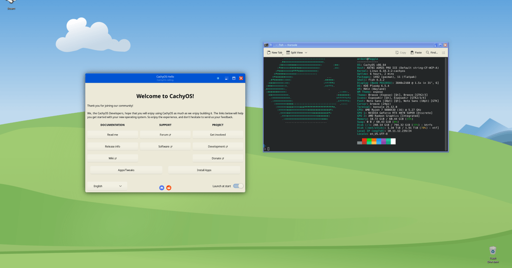
If you want KDE (which I think is the best DE and it’s not even a little close), I think you’ll find a nicer experience in something like Fedora. Fuck, I think you’d experience less maintenance burden with something like CachyOS, although please don’t treat that as a recommendation. I use EndeavourOS now, and I would genuinely go out and buy a macOS device if my only Linux distro option were Ubuntu (that’s not high praise of macOS) on the grounds that it’s such a poorly designed hunk of dogshit.
Not Good first distros but still getting picked up by people who don’t know:
Manjaro
Ubuntu
Omarchy
Zorin
Garuda
Everyone: If you’ve only used one of the latter, try another distro before you believe “Desktop Linux is not ready” or “Linux is not for me”.
Specifically on Steam: Which hardware you run on can affect on which distro it runs out of the box on and if you need to fiddle with drivers and firmware or not to get things running smoothly. There is also some difference between installation methods (some people swear by the flatpak version and others swear off it).
Maybe also check the health of your SSD and that your firmware/BIOS are up to date.
Being supportive of Ubuntu seems to be a minority, but I picked it over others simply because it felt more like what I wanted from the Debian lines. And I haven’t had any major issues at all. The main project I’ve got ahead of me is to remove Snap, as I see that’s a problem, mainly due to updates being so far behind (plus I’m pretty sure it’s a resource hog, I can see it there in Btop all the time). I’ve had several apps that I originally used Snap (I mean, it’s right there, why not) to find the version is old and missing newer features. So I just find the Apt or deb version, or even AppImage, and I’m back running. The OS itself is solid, and I so, so love just booting up and going within seconds, as well as shutting down right away. Not the classic Windows “hang”.
But I get that some people run into incompatibilities sometimes with hardware, so you do have to look around and find what works best for you. An example of mine on that was an old MacBook I had that simply was stuck since the OS isn’t supported anymore. So I put Kubuntu on it (since it needed a light OS), and it works fine for what it is.
The need to think about and deal with snaps is the reason I don’t recommend Ubuntu to noobs in general. It’s confusing and unnecessary and adds to the frustration of being forced to make judgement calls about things you don’t want to understand just to do your thing (we have enough of that as it is). And if you do decide against snaps, it’s a bit of an uphill battle and it’s easy to start feeling that the OS, like what they came from, is antagonistic. Canonical decided to isolate and take control of part of the Ubuntu ecosystem with snaps and that has made the distro a bit more niche compared to before.
For better or worse Ubuntu is also known to be on the edge with new developments on the desktop. Switching to new shiny desktop environments between major versions, being very early on Wayland-first, etc. Having to learn new OS UI after an upgrade is not ideal if you are not an enthusiast.
Other than that, Ubuntu can be a fine distro, both for server and desktop. If you either accept the particularities like snaps or know how to work around them, it can be a very good experience and it’s well-maintained in general. But it’s less of a no-brainer and more situational if it’s appropriate or not.
Like Alpine or Gentoo: Great distros but for different reasons not anything I would recommend a non-technical Linux virgin to replace their Windows or macOS with.
Maintained, a bit slow on the updating sometimes, as I mentioned. But a big factor for going with Ubuntu was if you’re looking at software out in the wild, chances are they’ll have either an Ubuntu version or something that will work with it. I’m not a fan of compiling stuff (although maybe with more Linux exposure that will change too).
In hindsight that’s probably not a great reason, after all it’s why Microsoft dominated the field for so long.
I cannot recommend Bazzite enough. I’ve been through every flavor of Linux and Bazzite is the only distro where everything just works the way Windows is supposed to. Bazzite works so well I’ve been able to switch my entire family over to it without a single complaint.
try using something other than ubuntu-based systems, like CachyOS or fedora. It’s likely a hardware issue. I’ve always had problems with Ubuntu-based distros that i never seem to have with arch-based or fedora-based.
The memory layout for windows is going to be different than it is under linux. A bad module could still be causing chaos but it might only really be affecting the RDP server rather than firefox.
For CPU, can depend on how you are configured. If you haven’t gone through the work of getting your power usage settings under control, linux likes to run the CPU clock frequency at 100% all the time rather than letting it ramp down. The two OSes also ultimately have different scheduling schemes which could be causing linux to put more pressure on various cores than what windows does.


Every time I try to switch to Linux it’s a complete disaster, and I don’t know why. Latest is that I installed Ubuntu, and all was working for 30 mins until I realised that Firefox was “stuck” and unclickable. Could not close it or interact with it. Last year I tried Kubuntu and it had problems with audio wavering in speed and Steam making the whole system borderline unusable when downloading. I read with envy feedback from all those who seem to have no issue. I’m kind of fed up about it actually.
I would honestly recommend against Ubuntu. I had the same issue: tried Ubuntu because it’s “the beginner distro”, and it turns out it wasn’t that at all. Ubuntu for me was a cobbled-together piece of shit with a terrible UI, corporate enshittification, and a major breakage around every corner. After a while dual-booting on my laptop, it started taking ~4 minutes to boot into it. Windows, meanwhile, was taking about 30 seconds. It also nuked my config twice, so everything I’d set up to mitigate Ubuntu’s default “person who designed this just had their eyes dilated” trash was undone. I quit Linux for years before giving it another try, because if this broken trainwreck was the “beginner” experience, why would I want to go further?
If you want KDE (which I think is the best DE and it’s not even a little close), I think you’ll find a nicer experience in something like Fedora. Fuck, I think you’d experience less maintenance burden with something like CachyOS, although please don’t treat that as a recommendation. I use EndeavourOS now, and I would genuinely go out and buy a macOS device if my only Linux distro option were Ubuntu (that’s not high praise of macOS) on the grounds that it’s such a poorly designed hunk of dogshit.
Thanks, I will try a different distro soon!
Good first distros for beginners:
Not Good first distros but still getting picked up by people who don’t know:
Everyone: If you’ve only used one of the latter, try another distro before you believe “Desktop Linux is not ready” or “Linux is not for me”.
Specifically on Steam: Which hardware you run on can affect on which distro it runs out of the box on and if you need to fiddle with drivers and firmware or not to get things running smoothly. There is also some difference between installation methods (some people swear by the flatpak version and others swear off it).
Maybe also check the health of your SSD and that your firmware/BIOS are up to date.
Bump for Garuda
Being supportive of Ubuntu seems to be a minority, but I picked it over others simply because it felt more like what I wanted from the Debian lines. And I haven’t had any major issues at all. The main project I’ve got ahead of me is to remove Snap, as I see that’s a problem, mainly due to updates being so far behind (plus I’m pretty sure it’s a resource hog, I can see it there in Btop all the time). I’ve had several apps that I originally used Snap (I mean, it’s right there, why not) to find the version is old and missing newer features. So I just find the Apt or deb version, or even AppImage, and I’m back running. The OS itself is solid, and I so, so love just booting up and going within seconds, as well as shutting down right away. Not the classic Windows “hang”.
But I get that some people run into incompatibilities sometimes with hardware, so you do have to look around and find what works best for you. An example of mine on that was an old MacBook I had that simply was stuck since the OS isn’t supported anymore. So I put Kubuntu on it (since it needed a light OS), and it works fine for what it is.
The need to think about and deal with snaps is the reason I don’t recommend Ubuntu to noobs in general. It’s confusing and unnecessary and adds to the frustration of being forced to make judgement calls about things you don’t want to understand just to do your thing (we have enough of that as it is). And if you do decide against snaps, it’s a bit of an uphill battle and it’s easy to start feeling that the OS, like what they came from, is antagonistic. Canonical decided to isolate and take control of part of the Ubuntu ecosystem with snaps and that has made the distro a bit more niche compared to before.
For better or worse Ubuntu is also known to be on the edge with new developments on the desktop. Switching to new shiny desktop environments between major versions, being very early on Wayland-first, etc. Having to learn new OS UI after an upgrade is not ideal if you are not an enthusiast.
Other than that, Ubuntu can be a fine distro, both for server and desktop. If you either accept the particularities like snaps or know how to work around them, it can be a very good experience and it’s well-maintained in general. But it’s less of a no-brainer and more situational if it’s appropriate or not.
Like Alpine or Gentoo: Great distros but for different reasons not anything I would recommend a non-technical Linux virgin to replace their Windows or macOS with.
Maintained, a bit slow on the updating sometimes, as I mentioned. But a big factor for going with Ubuntu was if you’re looking at software out in the wild, chances are they’ll have either an Ubuntu version or something that will work with it. I’m not a fan of compiling stuff (although maybe with more Linux exposure that will change too).
In hindsight that’s probably not a great reason, after all it’s why Microsoft dominated the field for so long.
I cannot recommend Bazzite enough. I’ve been through every flavor of Linux and Bazzite is the only distro where everything just works the way Windows is supposed to. Bazzite works so well I’ve been able to switch my entire family over to it without a single complaint.
Like others have said Ubuntu kinda blows.
try using something other than ubuntu-based systems, like CachyOS or fedora. It’s likely a hardware issue. I’ve always had problems with Ubuntu-based distros that i never seem to have with arch-based or fedora-based.
Good idea, will do.
Same hardware or different hardware? This sounds like a hardware issue.
An app getting stuck like that is indicative of GPU/memory problems. Possibly the CPU overheating.
Memtest would be in order to see if your memory is bad.
If the CPU or the memory were the problem, why wouldn’t Windows have issues?
The memory layout for windows is going to be different than it is under linux. A bad module could still be causing chaos but it might only really be affecting the RDP server rather than firefox.
For CPU, can depend on how you are configured. If you haven’t gone through the work of getting your power usage settings under control, linux likes to run the CPU clock frequency at 100% all the time rather than letting it ramp down. The two OSes also ultimately have different scheduling schemes which could be causing linux to put more pressure on various cores than what windows does.